



If you’re a parent in California with young children aged 3 or 4, you may have heard about Universal Pre-Kindergarten (Universal Pre-K). This exciting new program aims to ensure all 4-year-olds can access preschool by the 2025-26 school year, creating a strong educational foundation. You may come across terms like Universal Preschool or Transitional Kindergarten, but these all fall under the umbrella of Universal Pre-K.
A Variety of Learning Options
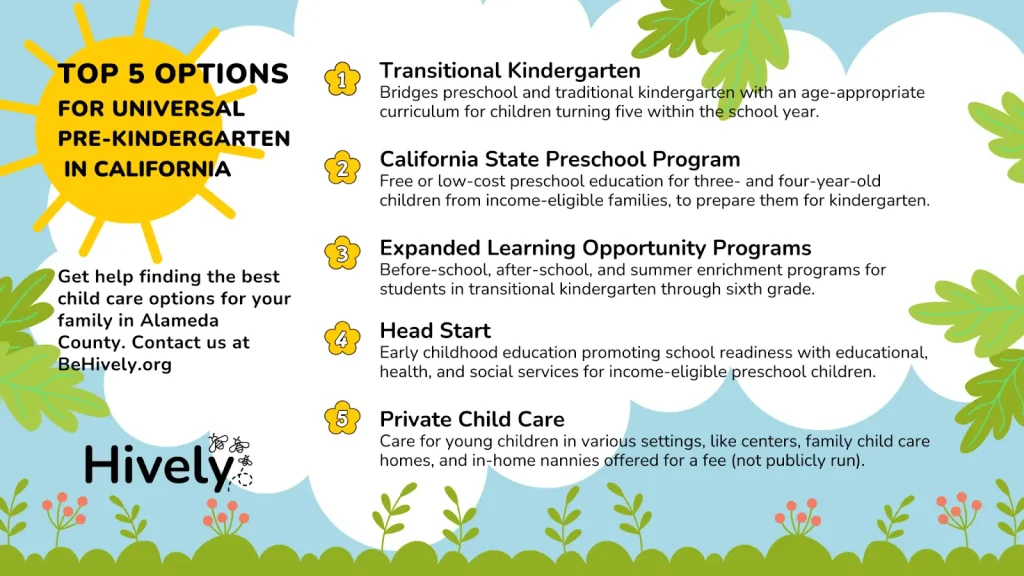
One of the standout features of Universal Pre-K is its “mixed-delivery system.” As a parent, numerous options are available to fit your family’s needs best. Your options include:
- Transitional Kindergarten (TK)
- California State Preschool Program (CSPP)
- Expanded Learning Opportunity Programs (ELOP)
- Head Start
- Private Child Care
You can also consider more flexible arrangements, such as Family, Friend & Neighbor Providers, Licensed Family Child Care Homes, and both licensed and unlicensed Center-Based Care. To find suitable providers near you, check out the My Child Care Plan—a statewide database that you can access 24/7 to search for child care providers in your area or throughout California.
Choose What’s Best for Your Family
As you explore your options, take some time to reflect on what your family needs. Consider these questions:
- Is my child ready for a Pre-K classroom?
- Is my child potty trained?
- Do I need transportation services?
- Would a small setting be best for my child?
- Do I need care during school breaks, summer, or before and/or after school?
- Do I need weekend or evening hours?
- Do I need part-time or full-time care?
Ultimately, you know your child best. In California, children must be enrolled in school by age 6, but attending Kindergarten and Pre-K is not mandatory. The decision should be based on your child’s readiness.
Financial Assistance and Flexible Hours
For parents concerned about the cost of childcare or those needing care during unconventional hours—like evenings or weekends—additional resources are available. You might find programs that offer smaller group sizes, school transportation, or care before and after school, as well as during summer breaks.
If you are participating in a subsidized program and considering options like TK or ELOP, it’s a good idea to discuss your circumstances with your case manager for more tailored information. These programs are typically renewed every 24 months and can continue until your child is 13 years old—or even 21 if they have an Individualized Education Program (IEP) and a doctor’s note.
Get in Touch for More Support
If you’re feeling overwhelmed or need more guidance, don’t hesitate to reach out to your local Resource & Referral or Alternative Payment Agency. We can help you get started here with resources designed to help you navigate your childcare options, ensuring your child is on a path to success.
As you embark on this journey of selecting the right early learning program for your child, remember that you are not alone. With helpful information and support, you can make the best choice for your family’s needs.
Reference Material: Universal Pre-Kindergarten Info Deck