



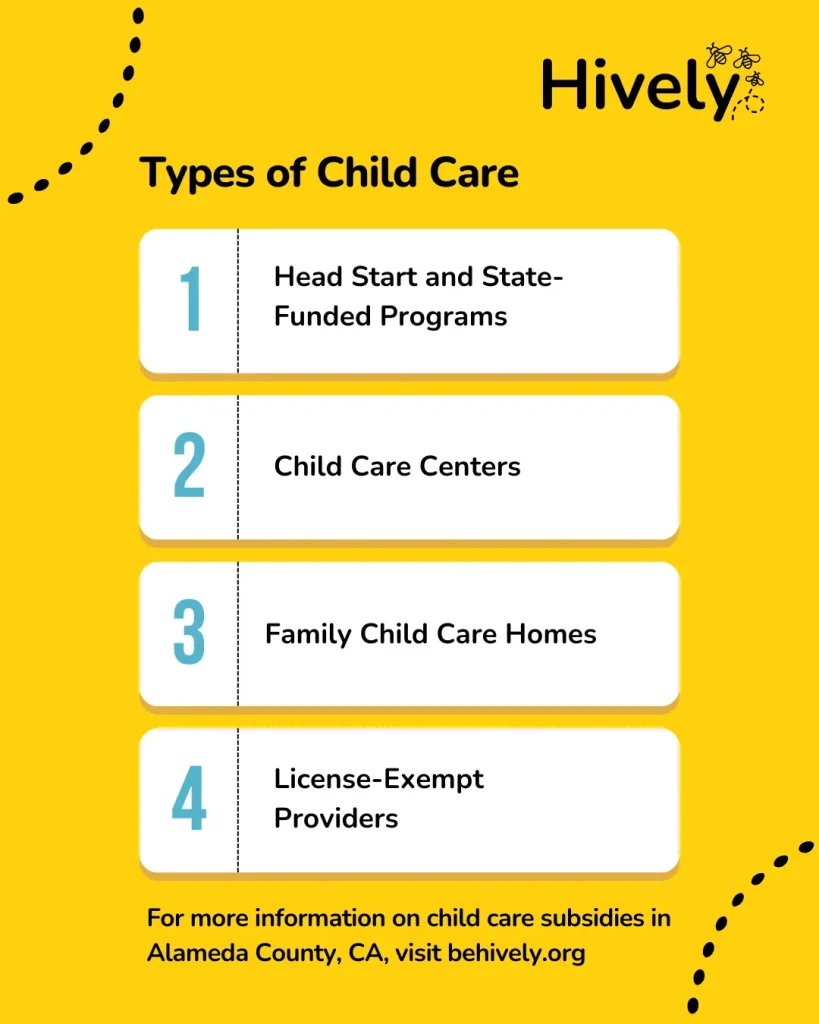
Selecting the right child care for your little one is an important decision. Your choice can impact your child’s early development and overall well-being. It can also determine your schedule and affect your available resources. With various options available, it’s essential to understand the features and benefits of the child care options available to you. Let’s explore four common child care options: Head Start and State-Funded Programs, Child Care Centers, Family Child Care Homes, and License-Exempt Providers.
Head Start and State-Funded Programs
Head Start and State-funded programs are held in classroom settings designed to foster social interaction and engagement.
Key Benefits
- These programs are dedicated to providing enriching, developmentally appropriate experiences that enhance cognitive, social, emotional, and physical growth.
- They follow strict health and safety regulations, ensuring a secure and nurturing environment for your child.
- Children are typically grouped by age, allowing for tailored activities that align with their developmental stages.
Cost-Effective Care
One of the best aspects of these programs is that families who qualify can access them at no cost, making them an invaluable resource for families looking for high-quality, affordable care.
Highly Trained Staff
Educators in these programs meet rigorous educational standards, including completing child abuse clearances and criminal background checks. Continued professional training helps them stay updated on best practices in early childhood education.
Understanding Ratios
With a favorable child-to-adult ratio, these programs ensure that your child receives ample attention:
- 10 preschoolers per adult in Head Start
- 4 children per adult in Early Head Start
- State Programs: 3 infants, 4 toddlers, or 8 preschoolers per adult
Schedule & Nutrition
Programs may offer full-day and part-day services during the school year. They also provide nutritious meals and snacks per Federal or State Food Program guidelines, ensuring your child’s dietary needs are met.
Child Care Centers
Child Care Centers provide a structured setting similar to Head Start, designed to inspire exploration and learning.
Key Benefits
- They aim to deliver developmentally appropriate experiences, showcasing various activities based on diverse teaching methodologies.
- Compliance with health and safety regulations ensures a secure and safe environment for every child.
- Children are typically organized by age, promoting ideal learning interactions.
Cost Considerations
Families usually cover the full cost unless eligible for subsidies, which can allow for more flexibility and alleviate financial stress.
Trained Professionals
Teachers are expected to have a minimum of 12 units in early childhood education, while aides require at least 6. All staff undergo background checks to ensure safety.
Child-to-Adult Ratios
- 4 infants (under 2 years)
- 12 preschoolers (ages 2-5)
- 14 school-aged children (over 5 years)
Flexible Hours & Nutrition
Most centers operate from 6 AM to 6 PM, offering part-time options for added flexibility. Many also provide meals and may participate in the USDA Food Program for balanced nutrition.
Family Child Care Homes
Family Child Care Homes create a warm atmosphere, similar to a nurturing home environment.
Key Benefits
- Providers often offer personalized, developmentally appropriate experiences that cater to each child’s needs.
- They comply with State health regulations, although the standards may vary slightly from larger centers.
- These homes encourage mixed-age interactions, fostering peer learning and social skills development.
Understanding Costs
Families often pay the full fee unless they receive financial assistance through subsidies.
Staff Requirements
Providers must complete preventive health training and pass essential background checks, ensuring a safe environment for your child.
Child-to-Adult Ratio
A maximum of 8 children can be cared for per adult, with adjustments based on the number of infants to maintain attentive supervision.
License-Exempt Providers
This broad group includes family members, friends, neighbors, and school-age programs offering a variety of nurturing environments for your child.
Key Benefits
- License-exempt providers often create family-friendly atmospheres that resonate with the values and culture of the families they serve.
- They can foster a sense of comfort and familiarity, making it easier for children to thrive.
Financial Considerations
When it comes to costs, families typically pay the entire fee for care, though subsidies are available for those who qualify. Many do not know that subsidies will pay a family member or neighbor for child care. It’s beneficial to explore these options and see how they might fit into your family’s budget.
Diverse Qualifications
The backgrounds of license-exempt providers can vary significantly. While some may have extensive training, others might not have formal education in childcare. While most license-exempt providers are not subject to formal inspections, some may be registered with TrustLine, offering an extra layer of security and oversight.
Personalized Attention and Flexibility
One of the standout features of license-exempt care is individualized attention. Most providers offer care for children from just one family (aside from their own), which can help your child feel secure and valued. Additionally, these caregivers often operate on flexible schedules, making it easier to find a routine that meets your family’s needs.
Nutrition Matters
When it comes to meals and snacks, offerings can vary widely. Since there are no standardized guidelines, it’s essential to discuss food provisions with the provider, ensuring that they align with your family’s dietary preferences and requirements.
Making the Right Choice for Your Family
Finding the right child care for your family can be an exciting journey. By exploring these options, you’re equipping yourself with knowledge to help ensure your child’s early experiences are nurturing and developmentally supportive. Take the time to visit programs, ask questions, and trust your instincts as you make this critical decision.
References:
First Five Years Fund, “Safety, Quality, and Accountability: Understanding Child Care and Early Learning Regulations.” https://www.ffyf.org/resources/2024/08/safety-quality-and-accountability-understanding-child-care-and-early-learning-regulations/
My Child Care Plan, “Choosing Child Care.” https://mychildcareplan.org/resource/choosing-child-care/